Posts

Small Shoji Screen

Image
This project started as a class assignment for Jay van Arsdale's joinery class in Oakland, CA but actually serves a purpose at my house. We have a south facing living room that gets too much sun at different times of the year. The windows in the room have fixed clerestory windows above. This small shoji screen fits the smaller clerestory frame and is held in place by two 1/4" dowels.

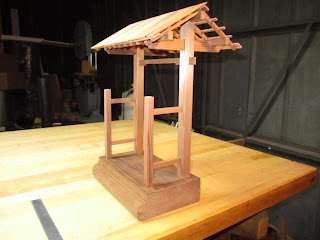
Sukiya gate model

Image
Purpose: design and mock up a model of a Japanese style gate to work out scale, design, and construction issues before spending $2000 on materials. No specific design was copied but overall dimensions and scale reflect common examples seen. Rough full scale dimensions would be 9 feet tall, roof is 8 ' long x 6' across, gate opening is 5' wide. I started by making a 1/10 scale drawing and worked out basic dimensions there. Making the model served the purpose as I ended up with a list of things to do and avoid on a full size version.

Alaskan cedar cabinet

Image
Design considerations: This design was loosely based on Japanese sewing boxes (haribako) and small cabinets popular in the first half of the 20th century. Of course, those craftsmen did not use dovetails for any joinery in their boxes - at least not visible dovetails. Next time I would follow their example. The dovetails are visually too busy once the finish darkened up the end grain. Alaskan yellow cedar (AYC) is beautiful to work with but a bit pricey so I wanted to minimize waste. This dictated the major dimensions.    Materials: AYC, poplar drawer sides and internal framing, Port Orford cedar drawer bottoms, maple drawer pulls, 1/4" birch plywood back. Titebond II glue.  Methods: The AYC came as rough sawn 2"x8" about 6' long. This was resawn with a frame saw to approx. 1/2" thick pieces, then cut to 18" lengths, then planed flat one face. A marking gauge (kebiki) was used to mark the edges for thickness and then the second face was planed flat...

Recycled redwood bench

Image
Design considerations: This bench is for seasonal outdoor use but it could get wet or otherwise abused so it had to be durable. The design was inspired by Chinese benches though no particular example was referenced. Limited material impacted leg design, allowed no apron, and dictated overall size. The seat is a full 2" thick and therefore some form of visually lightening edge treatment was needed. Material: The redwood for this project originated in a pre-1900 carriage house undergoing substantial renovation in San Jose, Ca. These were floor joists under a garage. Much was rotted, oil-soaked, split, nailed, caked with dirt and sand, termited, and otherwise unusable. The sound bits were far smaller than the original full 2" x 8" x 16's that made up the bulk of the boards and it took considerable effort to render them usable. Pins and wedges are of Honduras mahogany. Old growth redwood is not like the stuff you get at Home Depot these days. The color is deeper,...